

Prototyping & testing a mobile companion app, now 4.7/5 on Trustpilot
role
year
problem overview
People with mild or moderate hearing loss lack the awareness of their condition, and have only limited, expensive options to choose from.
solution
Zepp Clarity: a new kind of OTC (over-the-counter) hearing aid: physically invisible and shipped with a mobile companion app for support and customization.

EQ-style customizer for the frequency sensitivity, along with system's recommendation curve

Instead of going to an audiologist for a complicated and cumbersome hearing test, showing users their audiogram in-app
impact
Launched in Spring 2022, Zepp Clarity One won the Red Dot Product Design Award in the Hearing Aids category in the same year.
The mobile app had 1,000+ downloads in the first month alone. The project paved the way for the company to create 2 new products: Clarity Pixie and Clarity One. Most recently, it has a 4.8/5 rating on Trustpilot.
context
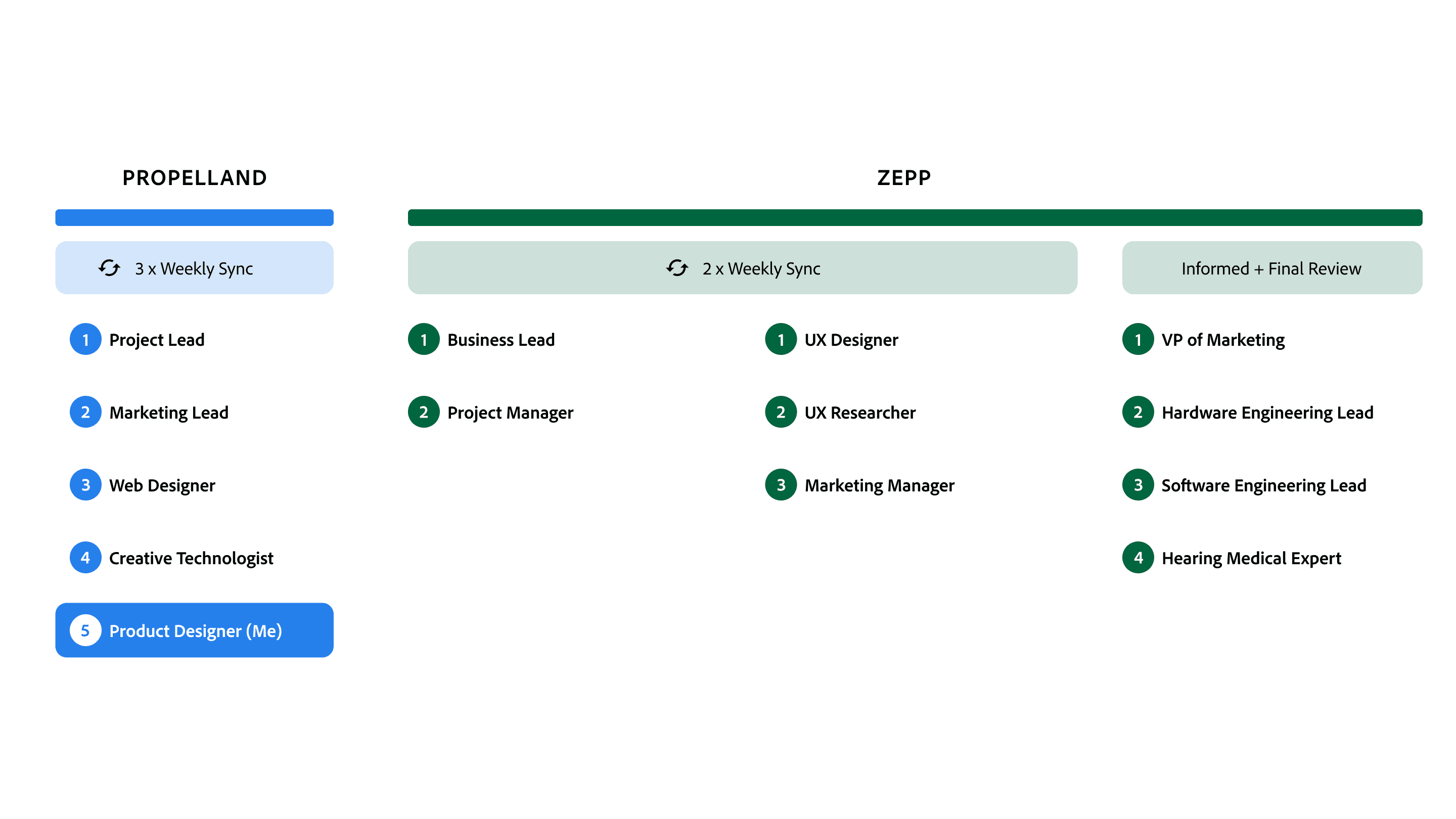
Zepp (under the Huami smartwatch brand) wanted to enter the US hearing aid market, with a competitive product & GTM strategy.
We really want to differentiate ourselves from the current US hearing aids market, and position our brand as more "independent and self-serve".
head of product & brand, zepp clarity
digging deeper
I asked the Head of Product to budget $2000 for an end-to-end walkthrough of Zepp's closest competitor.

understanding the space
No over-the-counter hearing aid category existed before. While the stigma around hearing loss being associated with old age is still present, a lot of younger folks (30-50s) experience mild/moderate hearing loss due to exposure to loud environments like concerts.
Americans affected yearly
Exposed to loud noises daily
haven't had proper tests done
How might we empower the mild and moderate hearing-impaired to be more independent (especially in the active younger demographic)?
prototyping
Understanding the competition helped in creating UX improvements, lowering product time-to-value.
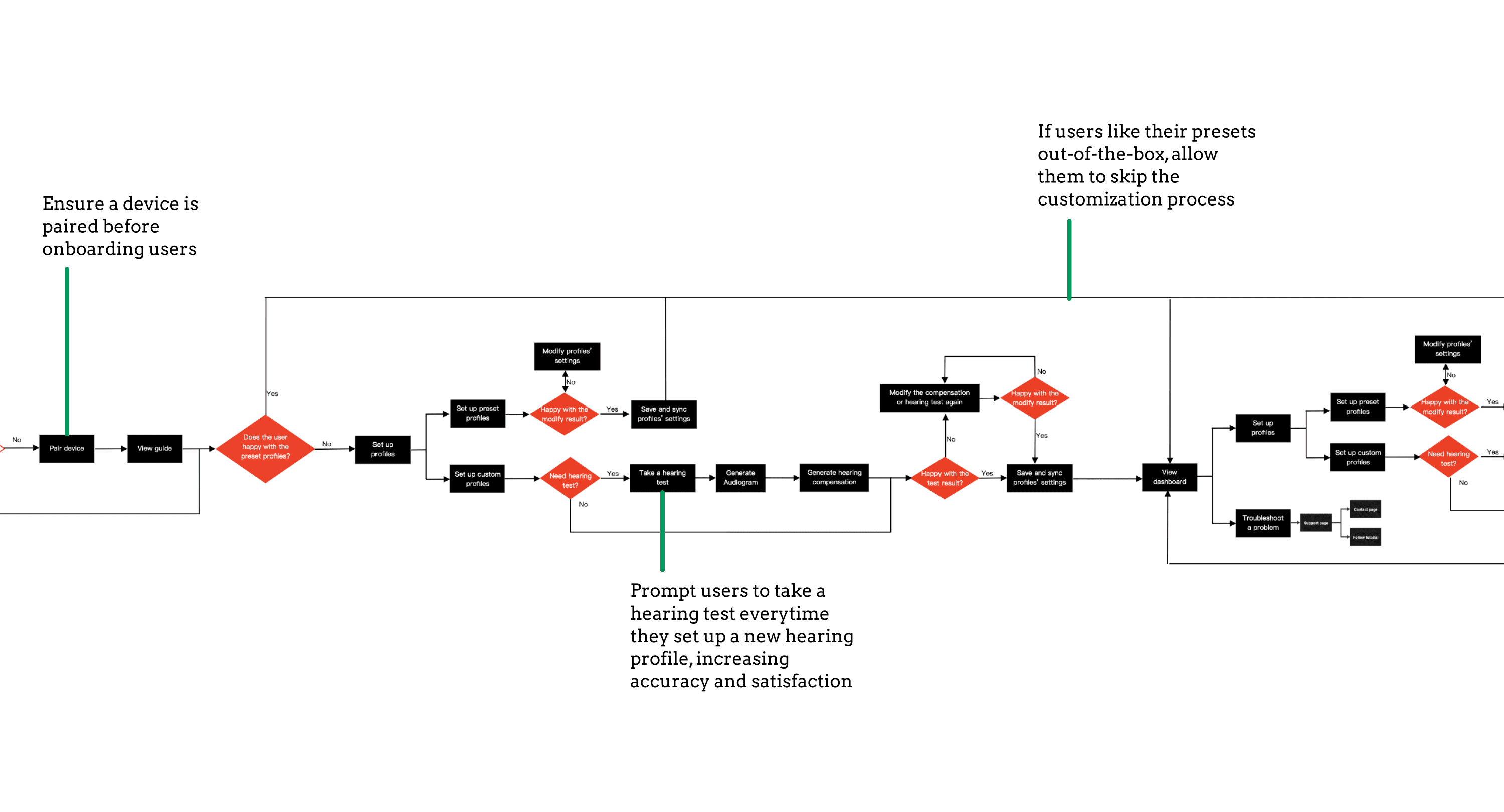
What if we could take inspiration from EQ-sliders and allow users to control their hearing?
Young professionals are usually tech-savvy, and I assumed they'd want more control than less. So, I thought of a less-jargony way for them to adjust their hearing aid sensitivity, and even take an audiogram (hearing test) in the app to recalibrate the sliders.
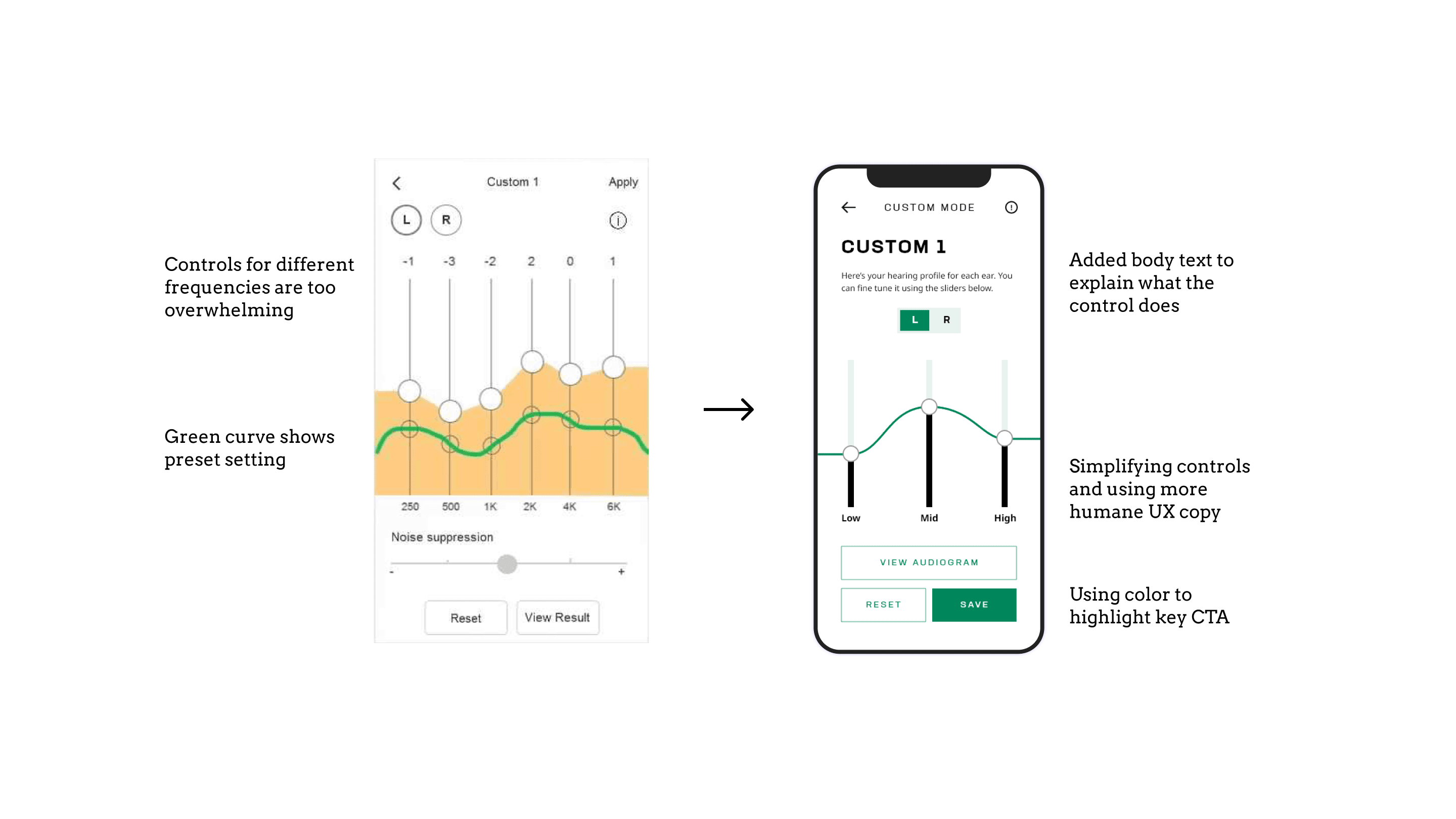
client's approach too complex, my idea: simplify & use human copy
Proof of Concept
Ran a full UX study with 15+ potential users: iterated based on feedback on onboarding / daily usage.


what went wrong
No Retention Data
The mobile companion app's real test will be in the day-to-day lives of the users. While I asked potential users to imagine the new UX, it is not the same as actually observing them for a long time.
what i would change
Diary Studies
Users saying how they'll interact with the product day-to-day, and observing how they actually do it, are two very different things. A diary study would be more informative about long-term effects.
Collaborating with the Propelland team was a game-changer for us. From project start to finish, they consistently delivered exceptional quality.
Head of north america marketing, zepp clarity

