
Shipping a 0-1 whiteboard classroom & scaling it to 20k users
role
0-1 Product Design, Design Systems, Design Engineering
year
2024-2026
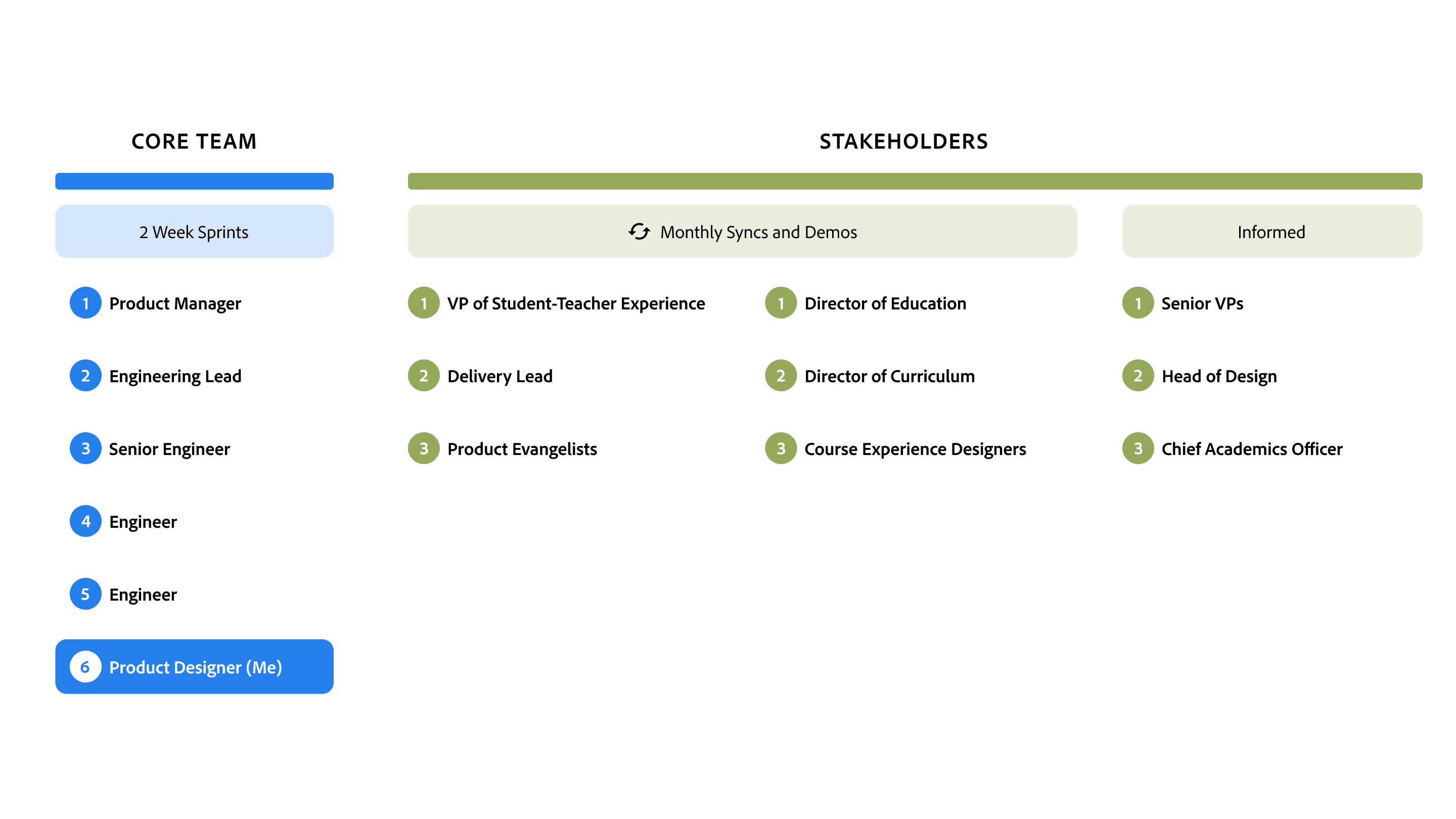
PM, Engineering lead, 3 Engineers
problem overview
Instructors relied on Zoom for virtual classes and Drawboard for in-person classes, but this experience lacked the collaboration & interactivity central to AoPS learning. Plus, a classroom platform has been the one missing piece in AoPS's end-to-end curriculum delivery.
solution
An infinite real-time collaborative canvas, so teachers and students can riff on a math problem without ever running out of space.

Interactives like polls with real-time monitoring so students stay engaged and focused on the content at hand

impact
Shipped & supporting over 20,000 students daily, with a 4.3 overall lesson rating.
With fewer than 1% of users returning to old tools, Torchboard has seen huge success in how teachers teach and how students learn across math, language arts, and science curricula.
context
Art of Problem Solving (AoPS) helps K–12 students develop advanced math, science, language, and computer science problem-solving skills.
We want to control the entire curriculum delivery lifecycle, especially how the lessons are taught. We expect to completely overhaul how we teach in the next 5 years.
VP R&D, Aops
digging deeper
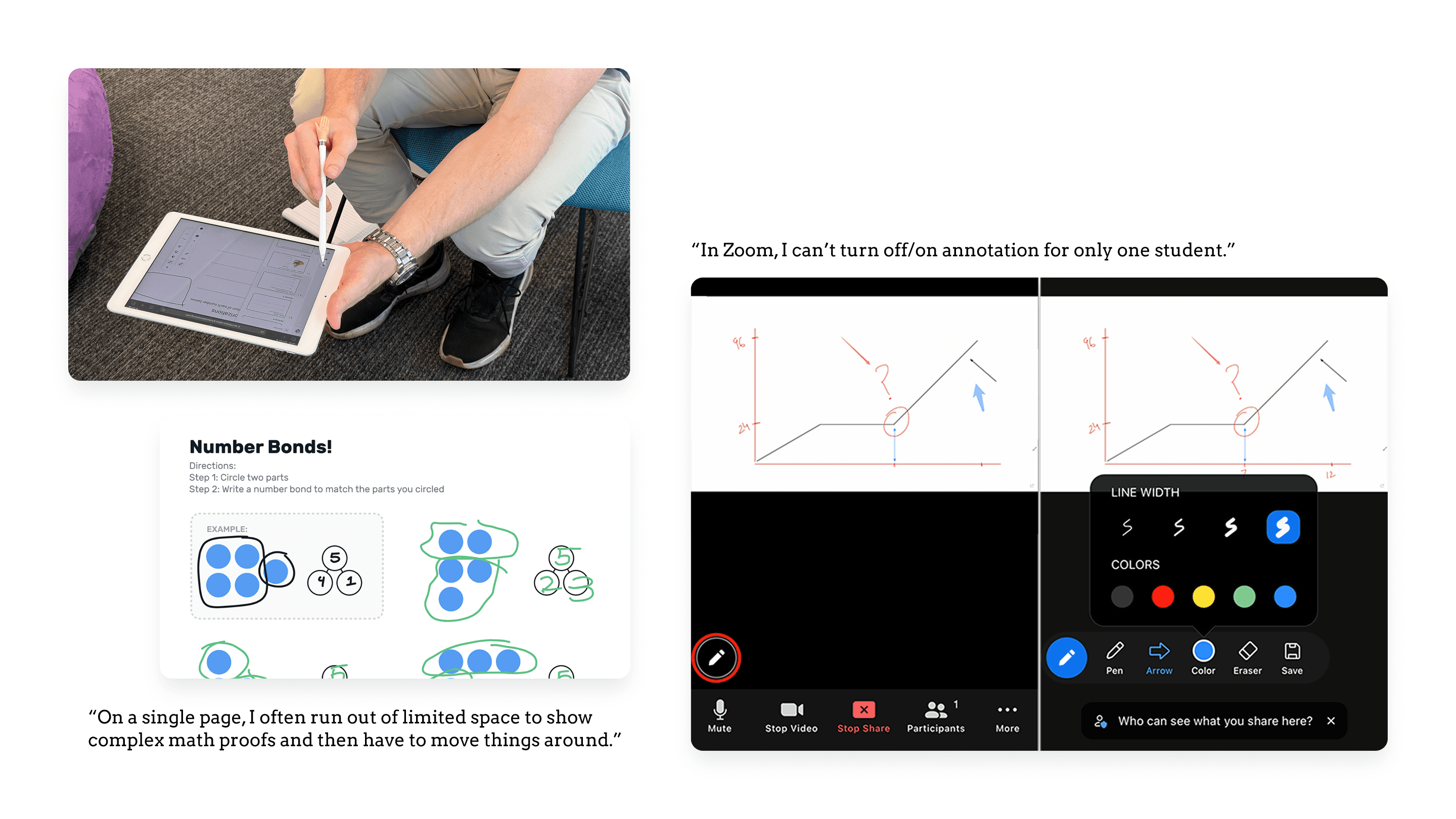
I observed live classes every month & interviewed 15 teachers to understand the learning dynamic.
why build our own whiteboard?
As a senior designer on the project, I repeatedly asked this question. While good whiteboards exist (Miro, Mural, FigJam, Freeform, etc.) and have their own advantages, none of them truly fit how AoPS wants to teach. This is why we needed a bespoke collaboration space.

can't have only one student draw

zoom focuses on meeting tools than whiteboard
How might we create a more focused, collaborative & interactive classroom experience for both instructors & students?
Approach
What does the future of AoPS learning look like?
product roadmapping
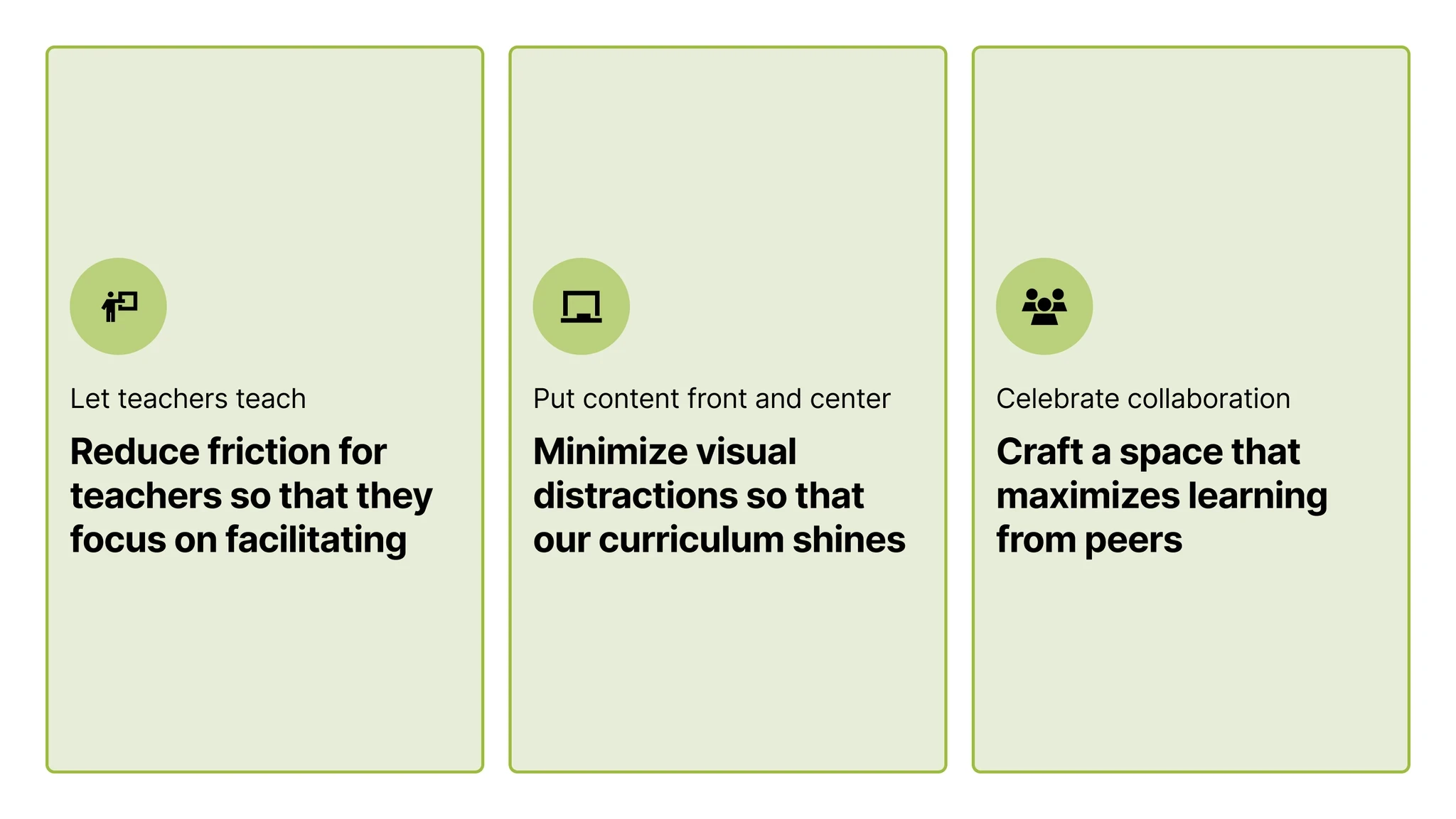
While Torchboard started as a replacement for Zoom + Drawboard, we saw significant potential in our IRL experiments. So, we pivoted and leaned into the in-person classroom experience to test out curriculum features and inspire the virtual class components later on.

What if participants could do more than just draw?
To truly harness the power of AoPS content, we wanted to create interactives: polls, embeddable PDF readings, images, web links, etc. This would increase student engagement, while also helping teachers rely less on 17 different tabs for each of those things.

early exploration of polls

shipped iteration
What if breakout rooms could be spatial? Like students sitting together for group work?
Teachers struggled to manage, monitor, and support breakout room collaboration at scale. I approached this as a spatial problem where the teacher could see every group's progress in real time and join the group that needs the most help.

early sketches (1 mini-board = 1 breakout room)

a lot of experimentation
design systems & design engineering
I built our Design System on top of Shadcn/UI & Tailwind CSS; merged about 50 PRs into our codebase.


what went wrong
Got too isolated
My team had a lot of autonomy and trust - I could design and ship faster, but the tradeoff was that Torchboard became too standalone, impacting our vision for it to be more horizontal.
what i'd do differently
Integration
There are several platforms AoPS uses for teaching - how can Torchboard be integrated into them? For example, can the chat-only lessons have a small Torchboard scratchpad?
Really impressed with how well Hardik understood the technical side of web dev, and he even shipped some of his own code!
engineering lead, in-class team

