role
problem overview
Imagine controlling the sharing permissions of a 5000+ member org using an on/off switch. That's a huge security and compliance risk for admins, so they end up disabling most Adobe CC services.
solution
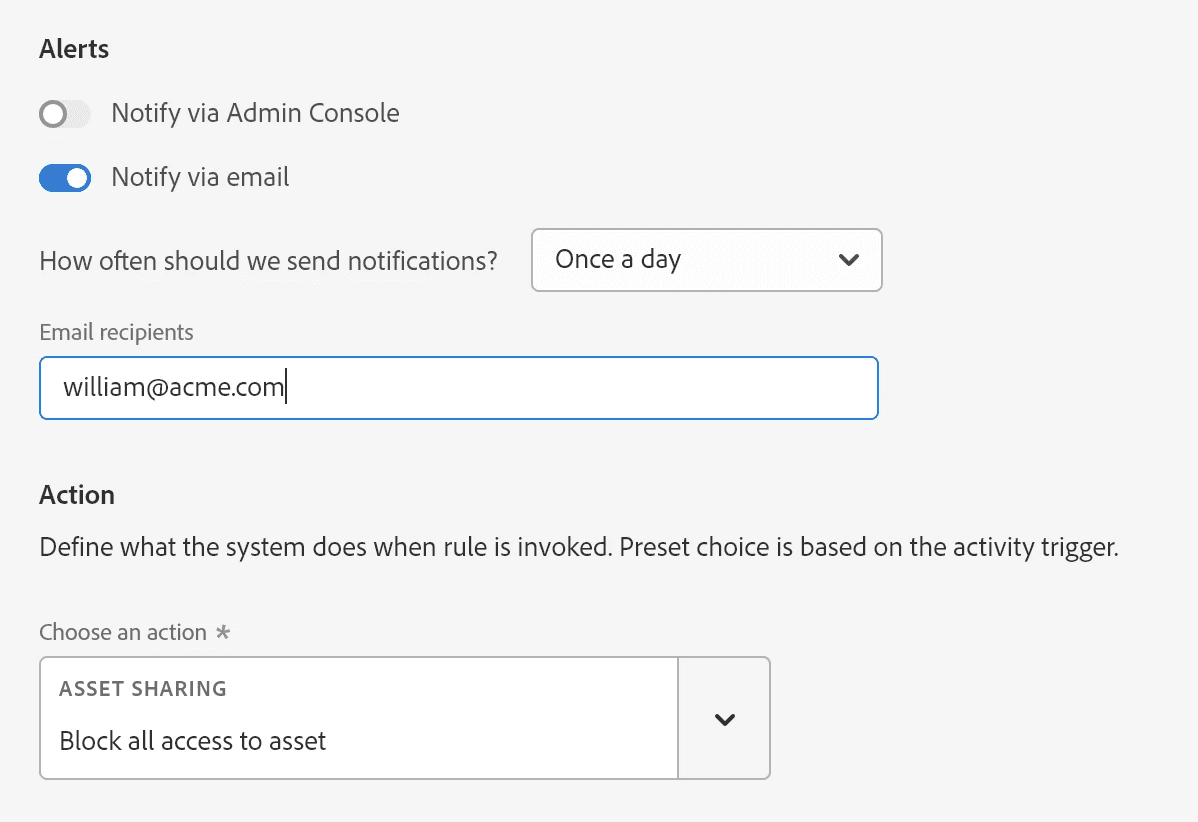
Monitor user activity by setting up Alert Rules that notify when a specific event happens (ex: a file was shared outside of the org)

Enable users to share Adobe assets via a public link, along with the safeguard of a predefined expiration date

impact
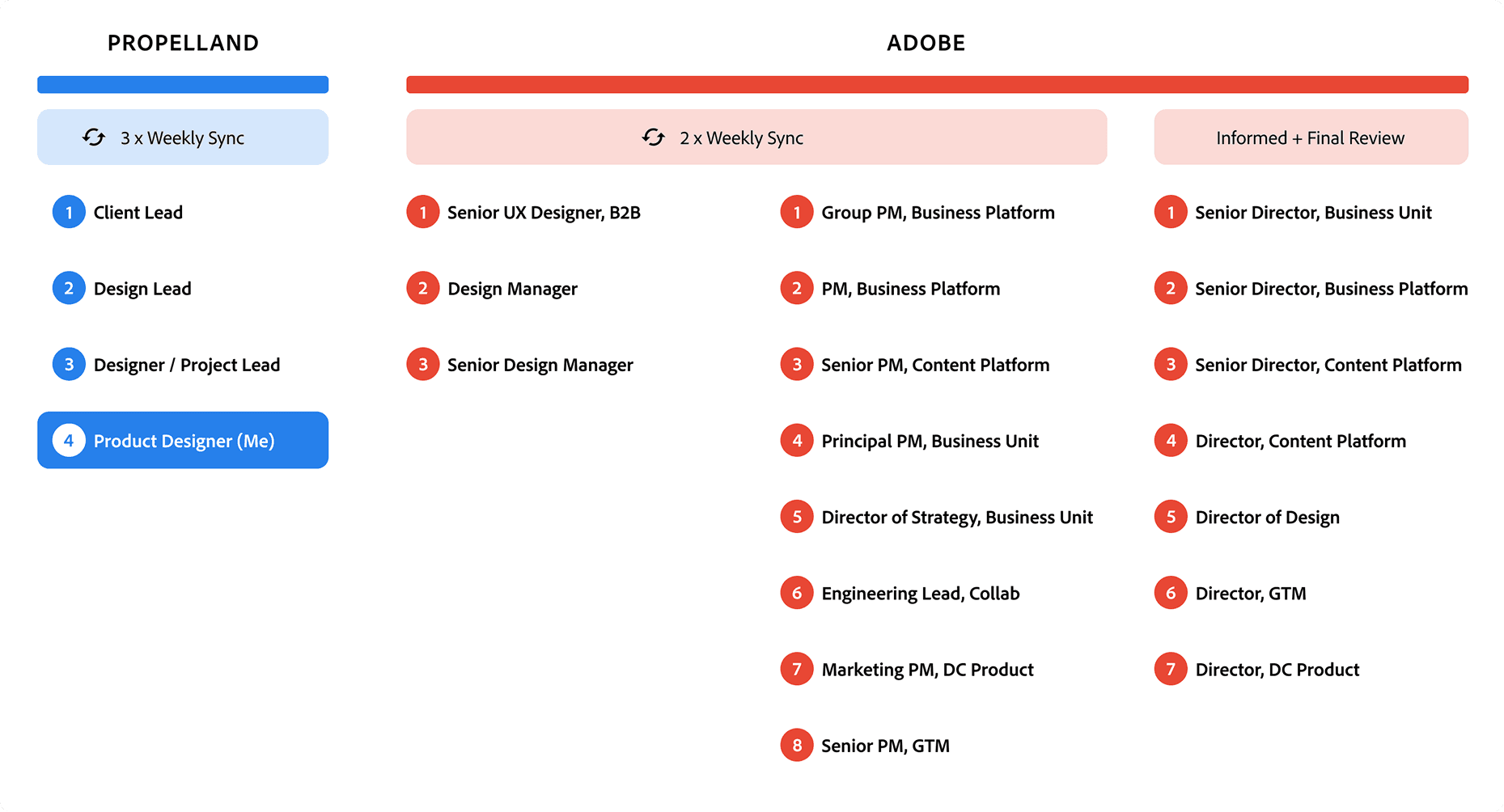
My team and I helped align 18 XFN stakeholders across the business, design, platform, and admin teams using UX frameworks and roadmaps to develop future features. Due to our good work we secured a $120,000 future budget to continue building out the roadmap.
context
Adobe does not provide admins enough granular controls to configure services for their org's needs.
As a result, admins either disable everything or request storage-disabled / feature-restricted licenses from Adobe. This adversely affects end users trying to collaborate downstream: unable to share files, don't know why, and have no way of changing it.
Right now, a lot of your policies and security settings are a light switch: ‘It’s on, or it’s off’. We also don’t make storage available, and therefore, other background services that are trying to connect cannot.
system admin, disney
becoming my users
I didn't know what an admin sees or does… so I became one!
User interviews were hard to budget, and testing was not scoped in the project. So, I asked senior leadership to basically give me admin rights to all our enterprise software. This helped me become an SME on all things admin, and develop strong empathy.
competitor research
Adobe CC is just one of the applications an enterprise admin has to manage in their org, so I learned what we could steal from other admin consoles through their navigation models, control provisioning, and experience patterns.

How can Adobe deliver enterprise-grade capabilities that help customers adopt CC services with trust and reliability?
Approach
What does the future of Adobe CC services look like?
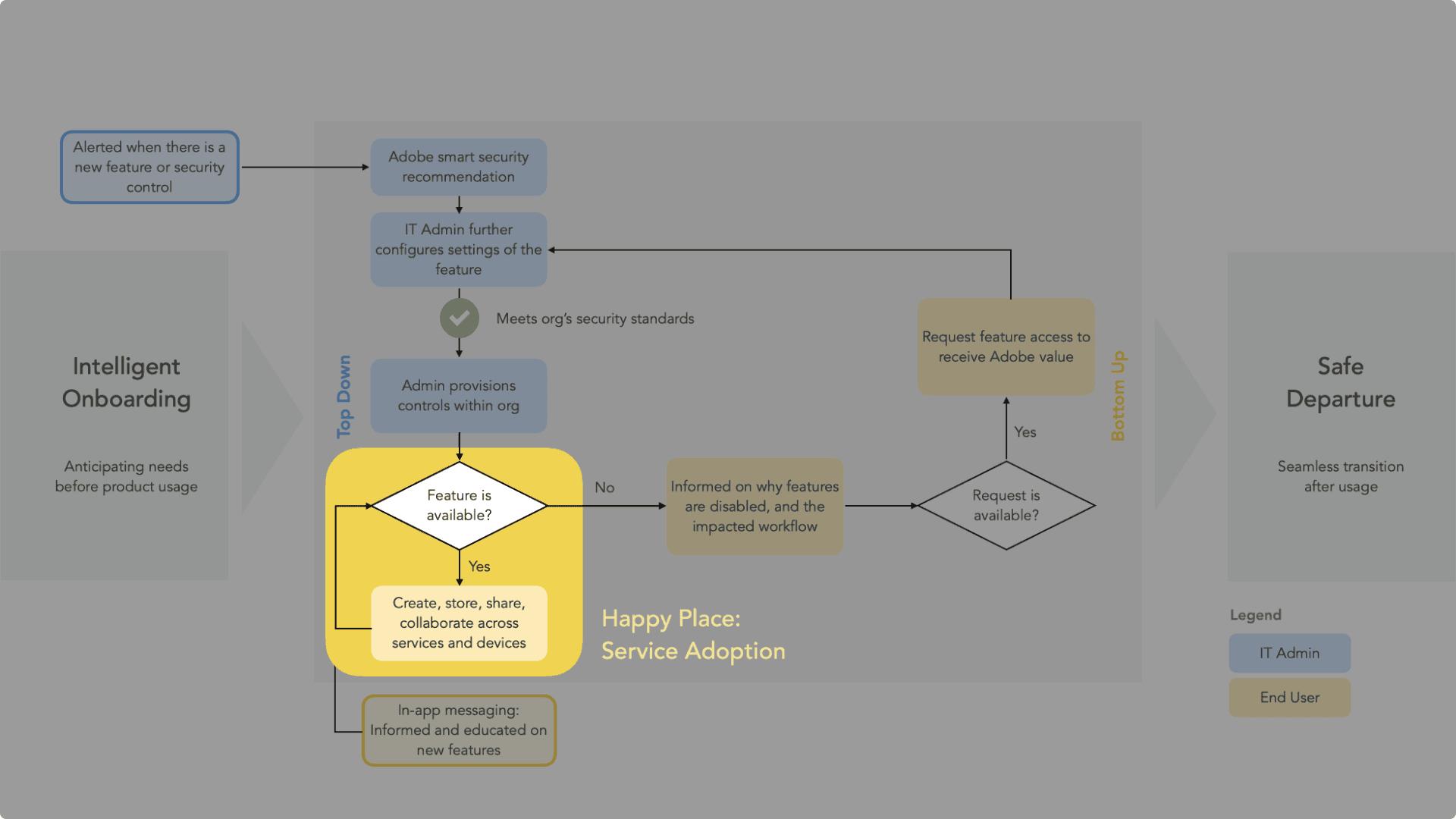
To align the larger stakeholder group before I started prototyping, and to show them how end users can drive service adoption, I created a big picture UX flow.
feature roadmapping
Adobe had a laundry list of features they wanted to work on, but no clear way of prioritizing them. So my team and I advocated for a 10min card sort with admins to help stakeholders feel confident in roadmapping the highest value features.

What if the admin console shipped with smart control presets, catered to the customer?
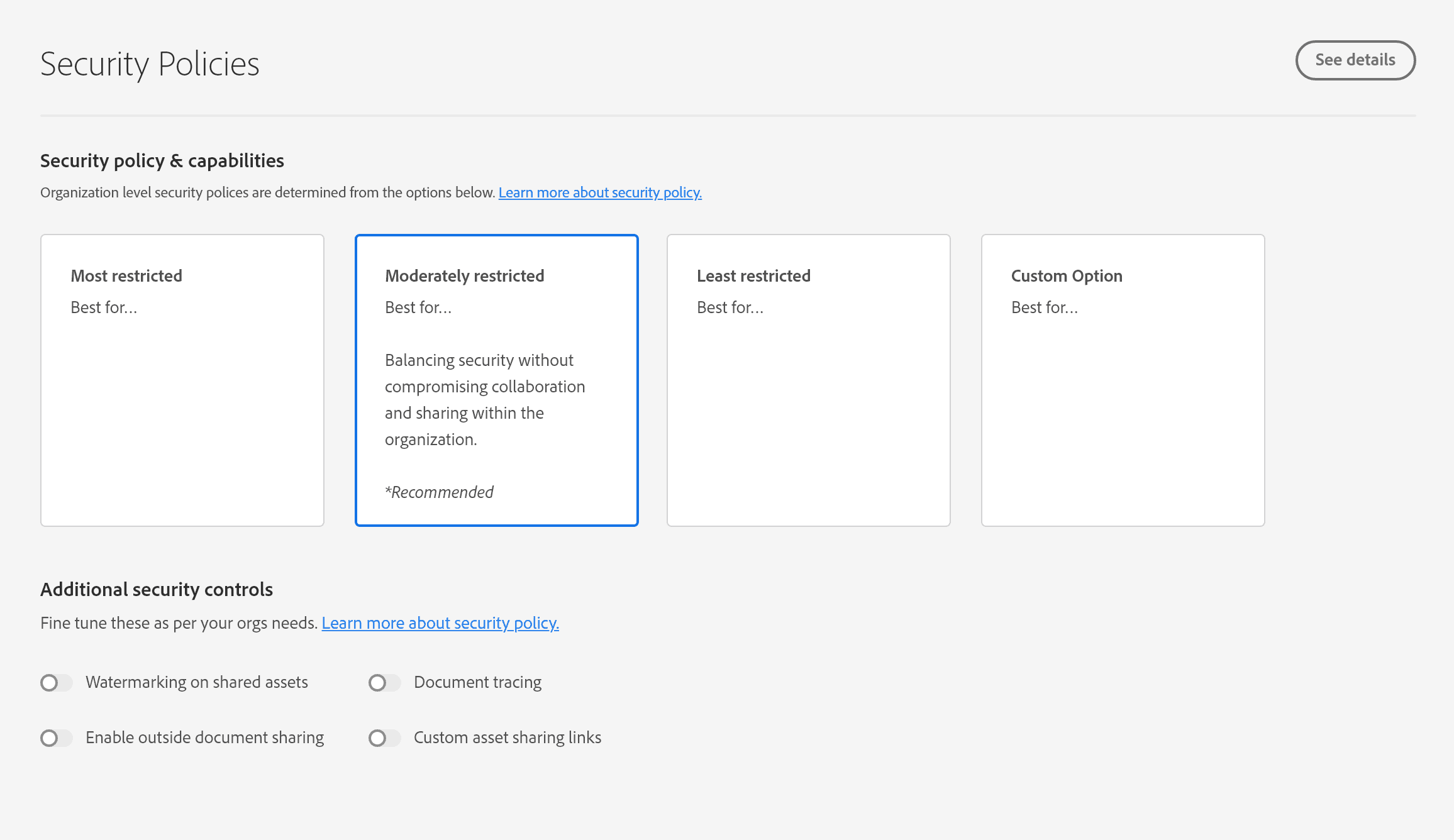
To increase trust in the system, I explored the idea of a security profile (a preset config of settings) based on what Adobe knows about an organization's usage. If an admin wanted to override this preset, we would give them fine-tune settings. Kind of like a gearbox.
early exploration

iteration #5 (approved)
What if the system took pre-approved actions on its own?
Most enterprise admin consoles allow setting up rules that trigger notifications. I wondered if Adobe could go further by allowing the system to take the necessary action as well. The added feature was de-scoped at the time because of feasibility issues.
notify + act (de-scoped)

notify only (approved)
final design
We handed off the UX framework, all our research, and the prototypes for the top 3 features that would continually build trust with admins by providing them both smart default settings and a way for admins to override them. I also designed in-app pathways for end-users to request access to features and admins to approve/review these requests.


reflections
Scaling clarity
Taking the time to be an SME helps drive credibility, and keeping everyone in the loop at the right pace drives alignment.
[3 years later] We still refer to your designs when we build out admin features - you did some solid work on that project.
sr. design manager, adobe
Other Featured Work